
Insights

Field notes

What actually happens between the construction site and the office — and how the WhatsApp updates your team already sends become live tracking, client-ready reports, and tracked follow-ups.

  • Running a Construction Crew on WhatsApp — in Spanish

    · 8 min read

    On the trades that build most of a house — drywall, paint, roofing, flooring — more than half the workers are foreign-born (NAHB, 2024 data), and on many of these crews the working language is Spanish. When it is, the foreman's morning update is a Spanish voice note in a WhatsApp thread — and someone bilingual retypes it into English every evening, or it never gets recorded. This post is about closing that gap without pushing an English-first app onto the crew.

    It's 6:40am. Before the first truck is unloaded, the drywall foreman on Lot 9 sends a voice note to the job's WhatsApp group:

    "Buenos días. Hoy somos nueve. Terminamos el hang en el segundo piso ayer, hoy empezamos el tape. Nos falta compuesto, mandé la lista al almacén."

    Nine on site. Second-floor hang finished yesterday, taping starts today, and they're short on compound — the list already went to the supplier. Thirty seconds, no form, no app. It is the most accurate account of that crew's day, and it exists only as audio in a group chat.
  • Why Your Trades Won't Log Into Your Builder Software (and What to Do Instead)

    · 9 min read

    Home builders subcontract roughly 84% of a build to about two dozen trade crews (NAHB, 2020). Those crews aren't your employees, and they won't keep your daily log, schedule, or task list current in software they don't own. So your superintendent does it — by phone and WhatsApp all day, then re-enters it at night. The fix isn't more training or a stricter trade agreement; it's capturing the updates from the channel the trades already use.

    You run six active homes. Every one of them is set up in Buildertrend — schedules built, selections loaded, client portals live. You pay for the seats. Your office runs on it.

    It's Monday. You open the dashboard to see where each job stands, and three of the six schedules haven't moved since Thursday. Not because nothing happened — the framer was on Lot 12 Friday, you know that because he sent your super a photo in the job's WhatsApp group. It's just that nobody entered it.

  • The Payroll Leak on Every Construction Site Nobody Is Measuring

    · 8 min read

    At 8:15am, the site admin opens the attendance WhatsApp group on his phone.

    The supervisor sent the message twenty minutes ago. 40 workers. Seven teams. Badge numbers, names, designations. Who's on rest. Who moved to another project overnight.

    The site admin opens the Excel sheet on his laptop. He starts typing.

    XH176 — Rakesh — Rebar — Present.
    XH119 — Hossain Rana — Rebar — Present.
    GB447 — Rahim abdur — Rebar — Rest.
    GB112 — Noyan — Formwork — Transferred.

    He does this every morning. He has done this every morning for eleven months.

  • WhatsApp-Based Construction Site Reporting: What It Is, Why It's Universal, and What's Still Missing

    · 12 min read

    WhatsApp-based construction site reporting is exactly what it sounds like: project teams coordinating site activity — progress updates, labor counts, material delays, inspection requests, safety flags — through WhatsApp groups instead of formal software. It is not a workaround. It is the default operating model for construction sites across India, the Middle East, Southeast Asia, and most of Africa and Latin America — and a growing share of residential and subcontractor work in the US and UK, where field teams coordinate by WhatsApp and text.

    This page explains how it works, what gets captured and what gets lost, and what it means for project managers, general contractors, and owner's reps trying to run sites at any kind of scale.

  • The App Nobody Opens: Why Construction Site Software Has a Field Adoption Problem

    · 16 min read

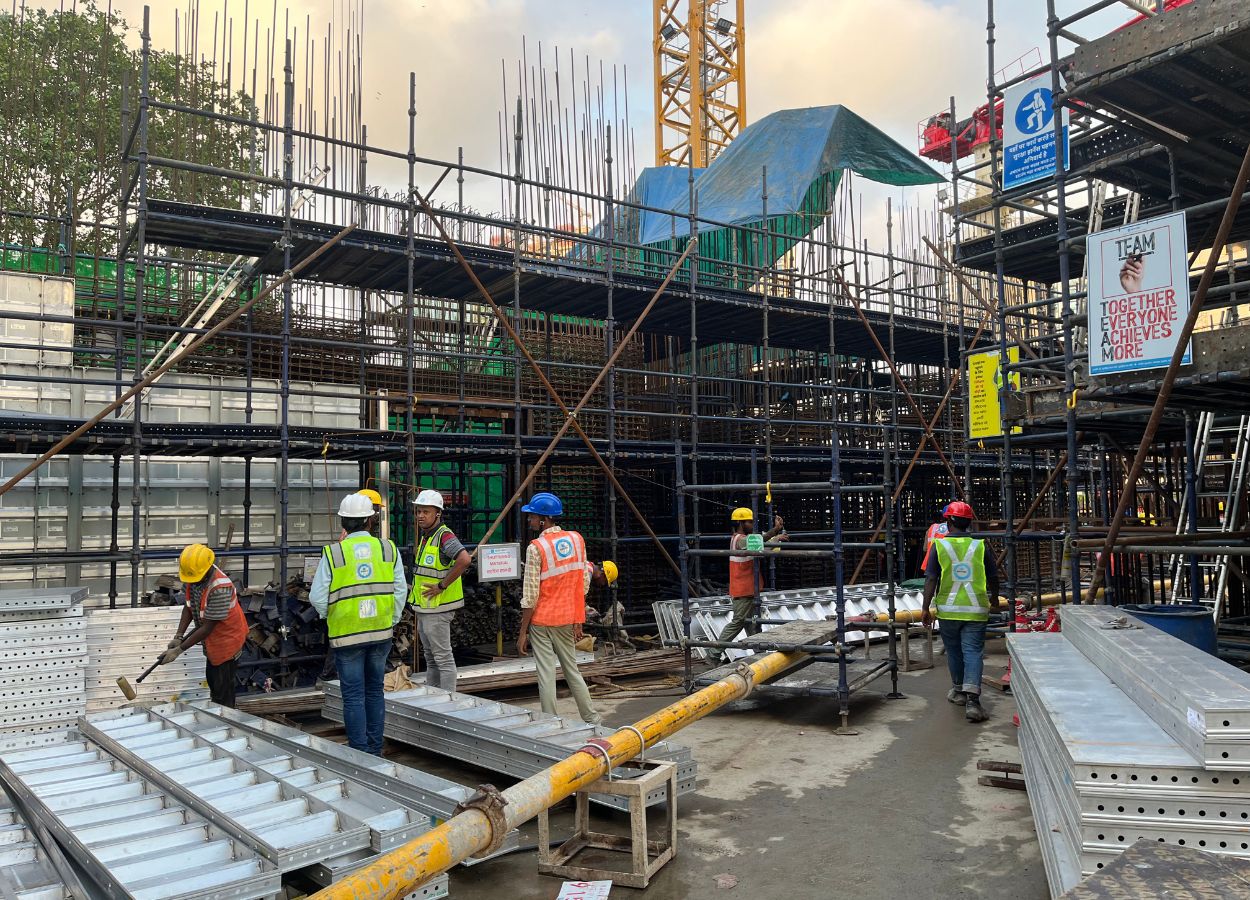
    Construction field teams don't refuse project management apps because they can't learn them — they refuse because a form-based tool doesn't survive contact with an active site. The person asked to enter the data isn't the person who benefits from it, the interface assumes a desk, and there's always a more urgent task in front of them. This post covers why the pattern repeats, why more training doesn't fix it, and what teams use instead: the WhatsApp group.

    It starts with good intentions.

    A general contractor wins a large project. The project director sits with the PMC. There's a review of how the last project went — the missed updates, the disputed DPRs, the WhatsApp screenshots dug up during a client call three months after the fact.

    Someone says: "We need a proper system."

    A software vendor gets called. There's a demo. The interface looks clean. The dashboards are impressive. There's a form for progress updates, a checklist for inspections, a photo upload flow, a daily log template. The vendor shows a case study from a highway project in another state.

    Licenses get signed. A training session is scheduled.

    And then, six weeks later, the app sits mostly unopened on 27 phones on site.

  • The ₹30 Lakh Problem That Was in a WhatsApp Message Four Days Ago

    · 6 min read

    It's Monday morning. You're on a call with your client.

    They're asking why Tower 2 slab casting is delayed. You didn't know it was delayed.

    You call your site PM. He tells you the shuttering material didn't arrive on Thursday. Work stopped. The supplier was chased on Friday. Material came in Saturday. But the casting window is gone — the structural engineer can only sign off on Wednesday now.

    Four days. Gone.

    You ask why nobody told you.

    "It was in the group, sir."

  • A Day in the Life of a Construction Project Manager

    · 12 min read

    These are unedited notes from a day spent on-site job-shadowing a construction project manager, anonymized to protect privacy. Names, specific locations, and company details have been changed.

    Project Context

    Project: High-rise luxury residential development
    Contract Value: ₹677 Crores
    Duration: 41 months
    Stage: Foundation complete - Structural work in progress Team Size: 350+ laborers, multiple subcontractors, engineering teams

    Construction site